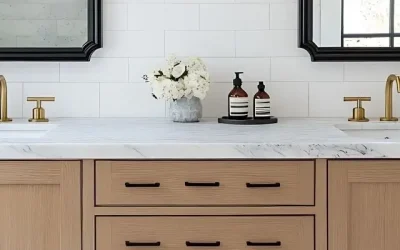
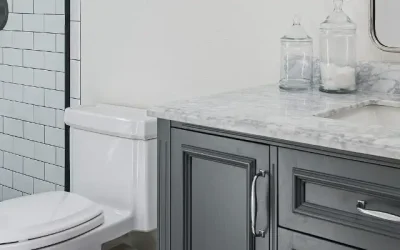
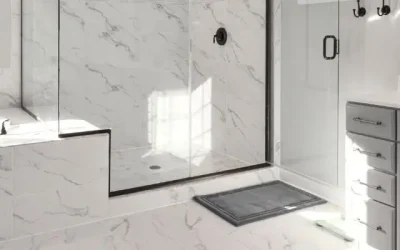
Bathrooms on the Gold Coast see heavy use with daily showers, humid weather, and even sandy feet coming in from the beach. All that moisture makes floors slippery and slips in bathrooms are one of the most common household accidents. Choosing the right tiles during a bathroom renovation is one of the simplest ways to improve safety without resorting to using ugly mats that compromise your home’s style. Tile slip ratings show how much grip different tiles provide in wet conditions, and in this guide, we’ll explain P-ratings while outlining which tiles work best for shower floors versus the main bathroom floor.
What are Tile Slip Ratings?
When you’re picking tiles for a bathroom renovation, it’s easy to focus on style, but safety matters too. Slip ratings measure how much grip a tile has underfoot, which is especially important in the Gold Coast where bathrooms stay damp longer thanks to the humid climate.
In Australia, there are two main ways tiles are tested:
- R-Ratings (Ramp Test): This test was developed in Germany and involves standing on a tile set on an oil-covered ramp. It’s mostly used in commercial kitchens and industrial areas.
- P-Ratings (Pendulum Test): This is the system homeowners need to pay attention to. It measures slip resistance in both wet and dry conditions using a swinging pendulum that mimics a footstep.
For everyday bathrooms, P-ratings are the guide to follow. They give you a clear idea of how safe a tile will feel when it’s wet, whether that’s on a shower floor or the main bathroom floor.
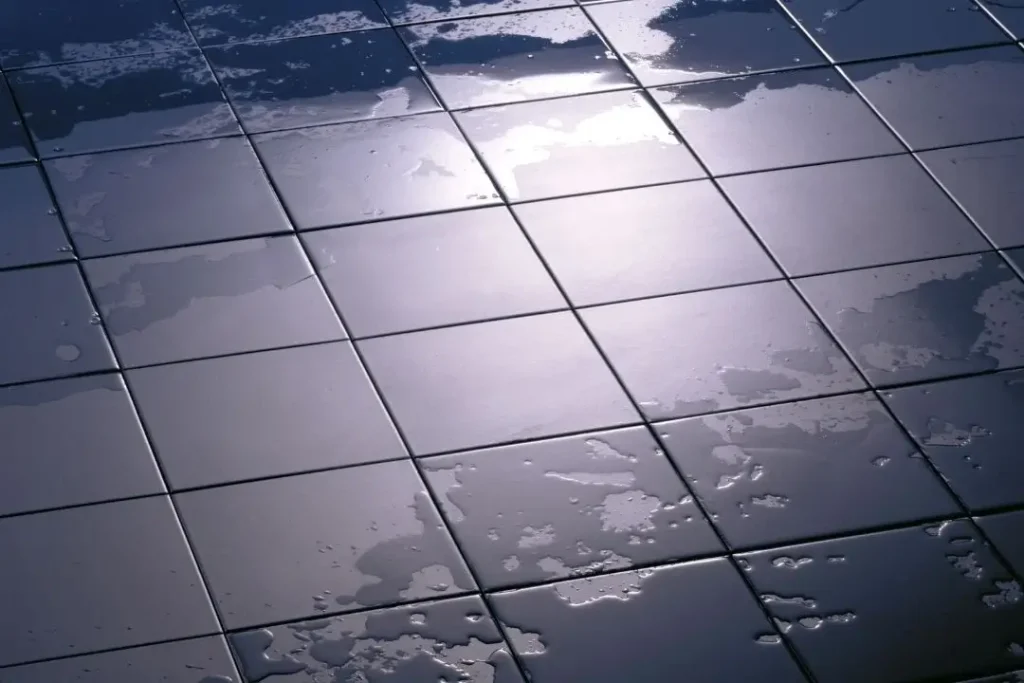
How P-Ratings Work
Tiles are given a slip rating between P0 to P5. The number shows how much grip the surface provides, especially when it’s wet. The higher the number, the more slip-resistant the tile. Here’s what each level means in everyday terms:
- P0-P1. Very slippery. These tiles are unsafe for bathroom floors and should be kept for walls only.
- P2-P3. Moderate slip resistance. Suitable for main bathroom floors where there’s occasional water but not constant wetness.
- P4-P5. High slip resistance. These are the safest choices for shower floors, where water and soap are always present. They’re also used around pools and outdoor areas where bare feet need grip.
For homeowners, the scale makes tile shopping less confusing. Instead of guessing which finish feels safe, the P-rating gives a clear guide you can trust.
Choosing the Right Tile for Each Bathroom Zone
Shower Floors
The shower is the wettest part of the bathroom, with water and soap building up every day. For safety, tiles with a P4 or P5 rating are the best option. They provide enough traction to reduce the risk of slips, even when the floor is soapy. Smaller tiles and mosaics are also a smart choice here because the extra grout lines naturally add more grip underfoot.
Main Bathroom Floors
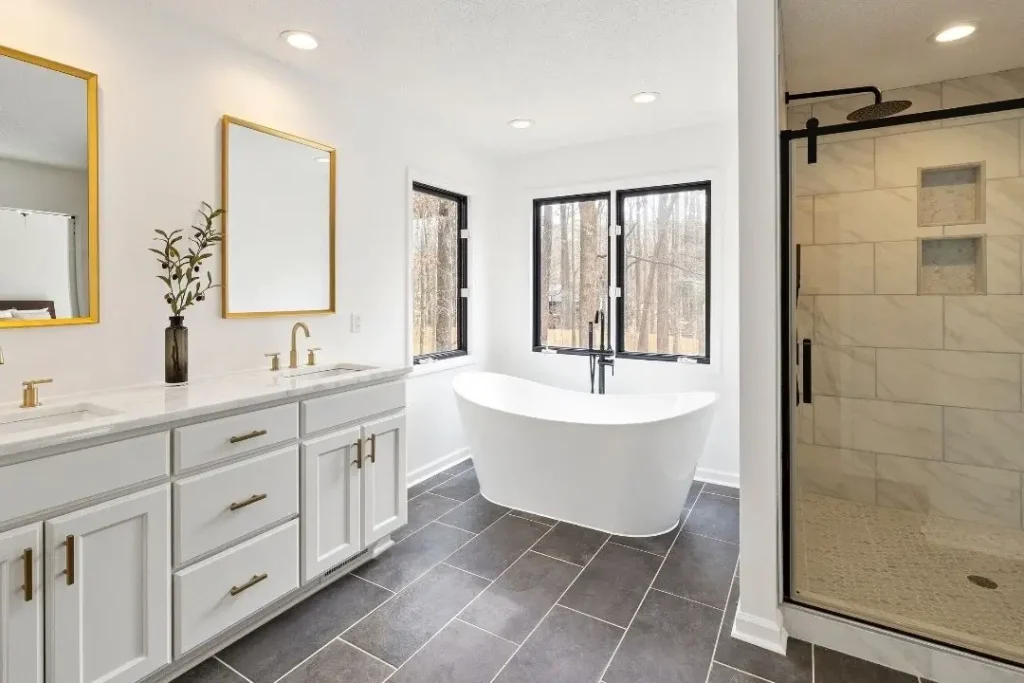
Outside the shower, the floor still gets damp but usually has a chance to dry between uses. A P3 tile is often suitable for this area, giving a good balance between safety and comfort under bare feet. Many homeowners also prefer smoother finishes here, as they’re easier to clean and feel softer to walk on.
Other Considerations
Slip resistance isn’t only about ratings. A few other factors also affect how safe tiles feel underfoot:
- Cleaning and maintenance. Soap scum and mould reduce slip resistance, so keeping tiles clean is key. Regular cleaning helps prevent slips and also works to prevent mould growth, keeping the space safer and easier to maintain
- Surface finish. Matte and textured finishes usually provide better grip than polished surfaces.
- Balancing style and safety. Glossy tiles look elegant, but they’re often best kept for walls instead of floors.
Practical Tips for Homeowners
Understanding slip ratings is one thing, but putting them into practice is what really keeps your bathroom safe. Here are a few simple steps to keep in mind when planning or maintaining your space:
- Always check the P-rating. Don’t buy tiles based on looks only. Ask the tile supplier about the P-rating so you know whether the tile is safe for wet areas like showers. If you’re browsing options, National Tiles is a good place to start.
- Match the tile to the zone. Use P4-P5 tiles on shower floors for maximum grip, and P3 tiles for main floors where water exposure is lighter.
- Keep up with cleaning. Even the best-rated tiles lose grip if soap scum or mould builds up. Regular cleaning helps tiles maintain their slip resistance.
- Use non-slip mats if needed. If you’re not renovating straight away, non-slip mats in showers or near baths are a quick way to reduce the risk of accidents.
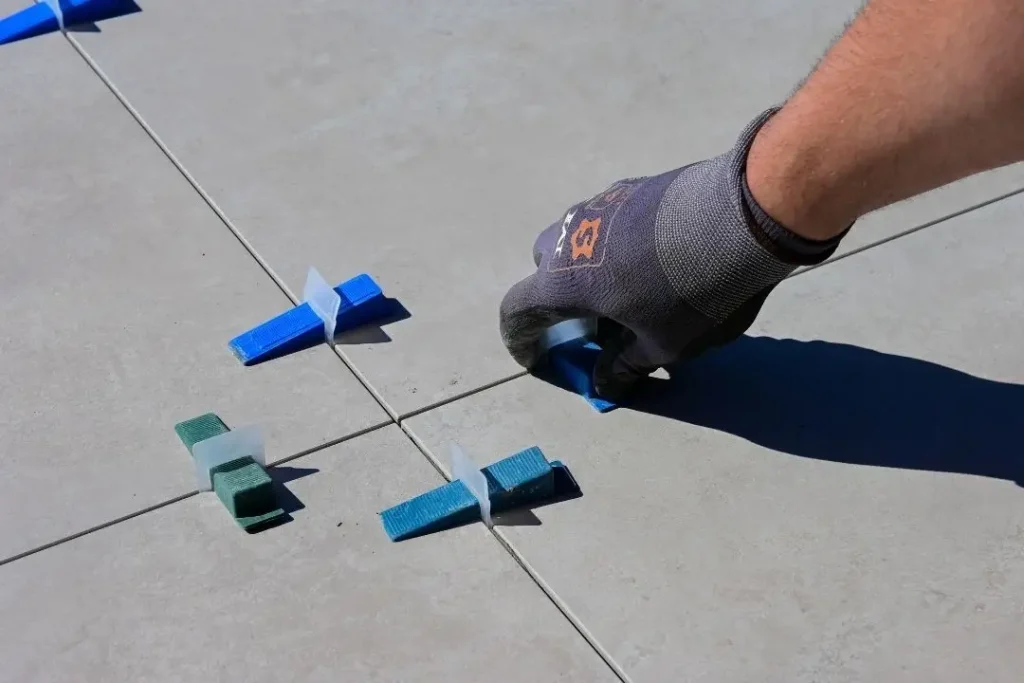
- Work with a licensed tiler or builder. Proper installation is just as important as the tile itself. A professional bathroom renovator will make sure the tiles are laid correctly and comply with Australian standards.
Safe Tile Choices for a Better Bathroom Renovation
Slip resistance isn’t the most glamorous part of choosing tiles, but it’s one of the most important for safety, preventing slips in the bathroom, which is one of the most common household accidents. Shower floors need the highest level grip with P4-P5 tiles, while P3 tiles usually work well for main bathroom floors. By checking P-ratings and matching to each zone, you’ll have a bathroom that looks stylish and feels safe to use every day.
If you’re planning a bathroom renovation on the Gold Coast, our team can guide you through the entire bathroom renovation process from design to to demolition and construction of your new custom bathroom tailored to your needs. Call (07) 5651 1406 today to book a free onsite consultation and receive a free bathroom renovation quote.